Finishing Services

Chem film or Alodine™

Chromate Conversion Coating

At a glance

Applicable Materials

Colors

Clear, Gold

Applications

Tools, hardware, electrical systems

Thickness

0.25-1.0 µm0.00001-0.00004 inches

About the Process

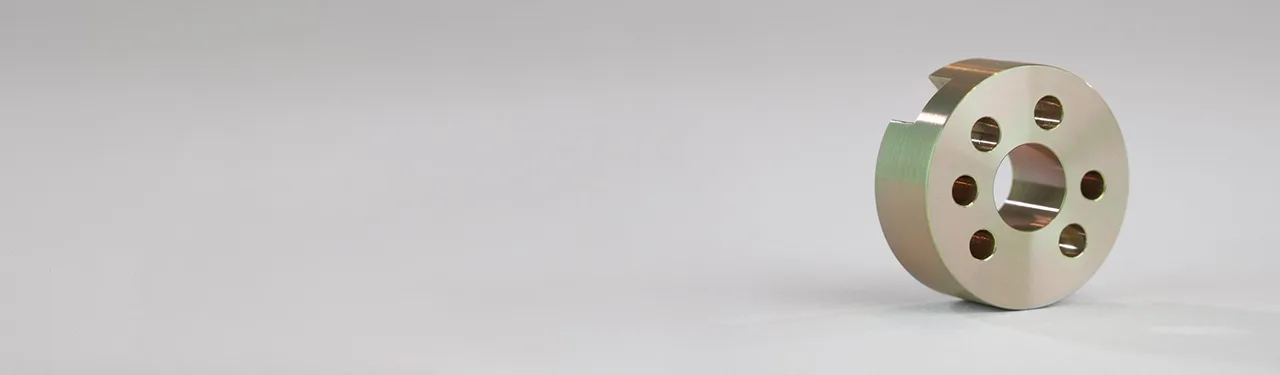
Chromate conversion coating, more commonly known as chem film or by its brand name Alodine™, is a chemical coating that passivates and protects aluminum from corrosion. It is also used as a base layer before priming and painting parts. The standard most commonly specified in engineering applications is MIL-DTL-5541F, which refers specifically to coating of aluminum alloys.

This protective layer is much thinner than an anodizing layer, and while both are created by immersion of parts into a bath, Chem film or Alodine™ is a simple chemical coating and the process does not use electrical current.

Chem film or Alodine™ is a slightly cheaper process than anodizing, though it is more prone to scratches, wear, and cosmetic damage. The most common color of the coating is an iridescent greenish-gold, and thus it may also be used for cosmetic purposes. However, this color comes from hexavalent chromium, which is toxic, so for RoHS compliance needs, there are clear versions of the coating available as well.

Design considerations

  • Plugging threaded/reamed holes not required unless tolerances are very tight, as thickness change is minimal.
  • Chem film or Alodine™ coatings offer a much greater electrical conductivity than bare aluminum
  • Media Blast parts before Chem film or Alodine™ to create a more consistent coating that hides small machine marks

YOU MIGHT ALSO BE INTERESTED IN

Design for Sustainability (DFS): A Guide for Engineering More Eco-Friendly Products

We want the products we design to last—to perform reliably, win market adoption, and deliver long-term value. But it’s not ideal if they last forever in a landfill, or negatively impact the planet we depend on.  That balance is at the heart of sustainable product design. As environmental awareness grows and regulations become more stringent, […]

Learn More

6+ Axis CNC Machining: Capabilities, Design Rules, and When It’s Worth the Investment

For engineers designing complex machined parts, the advantages of moving from 3-axis to 5-axis machining are well understood. The most capable higher-axis configurations— including 6-axis machining centers, turn-mill platforms, 9-axis and 12-axis cells, and Swiss-type turning—are less clearly defined and often poorly understood by engineers who haven’t worked with them directly.  This article explains what […]

Learn More